Boy, has this year got off to quite a mixed bag of tricks. Here we are now, end of February already, and while I must confess, I'm no farther in writing my book than I was four months ago, I'm so much farther in so many things that will hopefully aid in my process to finish this novel. Truth be told, of course I haven't updated this blog since Christmas because I haven't accomplished anything I said I would accomplish. But I've actually accomplished quite a lot that I didn't say I would accomplish. And therein lies some of life's greatest surprises.
Firstly, I sat down and read my mom's memoir one night, I think it was a weekend night, while Chris was busying himself with either building a workbench or setting up his own photo studio in the basement (being the resourceful husband he is). The "book" was a fast and easy read, and though it is in need of much literary love, my mom has some really great stories wrapped up in that package, and I'm really eager to talk with her more about them and write out the scenes with more description and depth. I have mixed feelings on what I read. It helped me see my grandmother more as a human being, where I've regarded her as a saint my entire life. But it only tapped the tip of the iceberg that was her personality, and I'm now I'm filled with many questions and many holes that need to be filled.
The main issue with what Mom wrote, though, and revising it for the masses, which is still an idea that I don't think she's sold on, is the same main issue I've been having with my story and thus the main reason I haven't sat down to write any more of it lately. That problem is that there is no major conflict in our stories. Sure, someone is dying, and you would think that would be conflict enough, but the conflict has to reside in the protagonist. There has to be something for the heroines to overcome, to come to terms with, to learn, to grow from. And in the case of both my mother's story and mine, we are but simple loved ones who live through the experience, changing in the end, sure, but in small ways, nothing quite resembling a denouement. Mostly, we are just telling events as they happen and sometimes volunteering our emotions as we feel them, but that does not make a story... not a good one anyhow.
I thought that perhaps we could combine our stories together... tell how the mother dealt with her first experience with death and losing one close to her, and then I'd chime in with my story. But that would make a better eighth grade essay than it would a memoir, with its compare and contrast elements. There would still not be any real conflict, no mountain for us to climb.
And my writing club has been no assistance either, which I started frequenting again. It's funny how things haven't changed in the four months I've been absent. There's still the same old man writing magazine propositions, but who never brings the actual articles for us to critique. There's the same petite woman with a deep voice writing the most rudimentary remakes of children's fairy tales. There's the lovely slender housewife who totes copies of her already written (though still in much need of polishing) novel. And there's the fantastical lyricist who hypnotizes everyone with his smooth narrating voice and dancing words, but has no actual comments to hand out to anyone else. And of course, there's me, who receives the same critique every time: I have a great style and a unique voice, but my pieces lack any kind of conflict.
I'm starting to feel some conflict with my lack of conflict.
Then the other day, I had some conflict with the huge pile of snow in my driveway, which is nothing new. Shoveling out my driveway usually involves a lot of cursing, throwing of hats, and general huffing and puffing. But in all that anguish, the answer appeared to me.
I've posed the question more than once on this blog about whether this story that I'm writing is really about my grandfather or if it is about me. I always assumed it was about me, because I obviously couldn't put words in my grandpa's mouth (even less so now that he's dead). But it's not just about me. It's about my relationship with the man, or, more importantly, the lack of relationship that I had with him. I always felt close to my grandpa, though I had no good reason to. We never had any heart-to-heart conversations, I never asked him for advice. In the six months I lived in his house, I don't think I even learned how to cook a single thing, though he made us dinner every single night. We really never shared anything together, and yet this world darkened for me the day he left it. It was only at his funeral, when I had nothing left to lose, that I could actually tell him how I felt about him. Now if that doesn't sound like plot resolution, then I don't know what does.
Although, now this opens up a whole can of worms where my personal life is concerned. Intimate issues I have with forming relationships, being scared to be honest with my feelings, the regrets I face for not taking a more active part in the lives of my family members... I can already visualize the therapy sessions that are inevitable in my future.
It's not what I wanted originally. I wanted this memoir to be a tribute to my grandpa, to tell his story. I didn't want my life to be in the forefront. But what is a memoir if it's not about the person behind the pen? I'm really hoping that, in the end, it will still be all those things I wanted when I started, and maybe now it'll actually be a good story, too. Fingers crossed.
Another important bit of news has occurred in my life. I've been accepted into the Masters Program at my old alma mater. I always assumed I would get in, because I was such a good student during my Bachelors semesters, no matter if my GRE score was lousy or if I submitted a writing sample I wrote five years ago and didn't bother revising. I assumed I would get in, but I wasn't certain, and I did have a few episodes where my brain flashed forward to show me my floundering future as an utter failure (yay, alliterism!). But alas, I made it, and I feel the winds of change a-brewing in the Furner household. I've already been propositioned to write a biography on Sir Walter Scott and his relation to Orientalism, two subjects I know absolutely nothing about, which my dear cousin in Kentucky assures me is entirely normal for graduate school. It's a little strange being thrown back into the deep end so abruptly, and truth be told, I'm thoroughly terrified of this project, but I'm also excited and relieved and I feel like I'm back in the place where I belong. However, now this project takes away precious time from my own writing, and the deadline for it is, of course, July. I think one project will help fuel the other, though. The critical thinking and word juggling of one will only facilitate productivity of the other, or at least, so I'm hoping. Again, fingers crossed.
I think "fingers crossed" is the epitome of my emotions at this moment in time. I have a lot going for me, and I'm hoping to keep the motivation alive, to keep all the balls in the air, and I'm holding my breath that perhaps this is the start of something bigger and better for my life.
Fingers crossed.
Showing posts with label family. Show all posts
Showing posts with label family. Show all posts
Monday, February 28, 2011

Monday, December 27, 2010
A novel holiday contribution...
Well, seeing as you haven't heard from me for over a month, you can bet it's safe to say that NaNoWriMo was a complete and utter failure. I got nowhere near the designated 50,000 words and got too wrapped up in other things to allow myself to care much. Am I disappointed in myself? Perhaps a little. I mean, when you think about it, it's not THAT hard to write that much in 30 days. One of my friends who participated surpassed the goal with a whopping 60,000-plus words. It's not like a marathon where you can only do it if you've trained for it. Anyone can sit down and write that much at any time they want to. So to not even get close to accomplishing such an achievable goal did do a bit of a number on my self-respect and confidence.
Although I know it wasn't because I COULDN'T write that much. It was because I chose not to. I chose to believe other things were more important. And if faced with that same decision today, I'd make it again. Some things are more important than NaNoWriMo. Another month, another year would have been better for me, would have had less life-altering changes to combat with. But that goes back to the whole premise of NaNoWriMo and the reason people do it in the first place. I learned that this year and I will try to keep that in perspective next year.
And in that respect, NaNoWriMo wasn't a failure at all. I am so glad I at least attempted it and stuck with it for two weeks. I learned so much about myself and my writing. I learned to pay attention to the tiniest details and to always keep the reader in mind. It got me really excited for the memoir, actually, though my actions may suggest otherwise. And though I rarely designated my writing as more important than other chores, I always deemed it significant enough to include in the schedule. I never thought to myself, "I shouldn't be writing" or "I shouldn't bother writing." In fact, I often thought, "I should be writing," or, "I WISH I was writing. " The fact that I want to write and want to make time for writing gives me hope that I will see this project through to the end.
Therefore, I have decided that January is going to be my makeup NaNoWriMo. I'm gonna get out the tens of thousands of words I didn't write in November and achieve enough words to be able to call myself a novelist. I feel like I can't begin to work on the editing and the fine-tuning of the novel until I get it all out on the page, and really, this being a memoir, I should get it all down before I find myself forgetting anything. So I'm excited to get that finished and follow through with what I should have completed a month ago.
However, I do have another distraction tempting me away from my own memoir. This holiday, when we were all gathered at my mother's, she handed me a finished copy of HER memoir about her mother's death. I've been dying to read it since I even knew such a thing existed, but I didn't want to bug her to finish it or to show me because that's something she had to figure out on her own and something I didn't want to feel rushed. But as part of our Christmas gift, she gave each my brother and me a copy. You should have seen the beaming smiles on our faces. I was so proud of her, and I think she was really proud of herself.
We had always talked about (perhaps only joked) about how I could edit it for her when she finally did finish it. But she didn't seem too keen on the idea now that it was written. "Oh, Jen, I think you'll be disappointed when you read it," she said.
"But let's just say I want to change some things..."
"I didn't write this for publishing," she said.
But I could barely help myself. Only reading the first page, completely oblivious to the conversation in the living room, I found myself making all kind of mental notes on how to make it better. Not saying that it was bad. Goodness, no, that's not the case. I haven't read it yet, but I know before looking that, between her and me, we could make that into something really fantastic. She's got the story and I've got the creative flair. And really, what more do you need to write a smashing book? Hell, some people on the Best Sellers list don't have either of those things.
Really, though, I'm excited to read it, to know more about my grandmother, my family, and heritage, myself. And maybe I'll find some answers to questions I'm having about my own book.
Although I know it wasn't because I COULDN'T write that much. It was because I chose not to. I chose to believe other things were more important. And if faced with that same decision today, I'd make it again. Some things are more important than NaNoWriMo. Another month, another year would have been better for me, would have had less life-altering changes to combat with. But that goes back to the whole premise of NaNoWriMo and the reason people do it in the first place. I learned that this year and I will try to keep that in perspective next year.
And in that respect, NaNoWriMo wasn't a failure at all. I am so glad I at least attempted it and stuck with it for two weeks. I learned so much about myself and my writing. I learned to pay attention to the tiniest details and to always keep the reader in mind. It got me really excited for the memoir, actually, though my actions may suggest otherwise. And though I rarely designated my writing as more important than other chores, I always deemed it significant enough to include in the schedule. I never thought to myself, "I shouldn't be writing" or "I shouldn't bother writing." In fact, I often thought, "I should be writing," or, "I WISH I was writing. " The fact that I want to write and want to make time for writing gives me hope that I will see this project through to the end.
Therefore, I have decided that January is going to be my makeup NaNoWriMo. I'm gonna get out the tens of thousands of words I didn't write in November and achieve enough words to be able to call myself a novelist. I feel like I can't begin to work on the editing and the fine-tuning of the novel until I get it all out on the page, and really, this being a memoir, I should get it all down before I find myself forgetting anything. So I'm excited to get that finished and follow through with what I should have completed a month ago.
However, I do have another distraction tempting me away from my own memoir. This holiday, when we were all gathered at my mother's, she handed me a finished copy of HER memoir about her mother's death. I've been dying to read it since I even knew such a thing existed, but I didn't want to bug her to finish it or to show me because that's something she had to figure out on her own and something I didn't want to feel rushed. But as part of our Christmas gift, she gave each my brother and me a copy. You should have seen the beaming smiles on our faces. I was so proud of her, and I think she was really proud of herself.
We had always talked about (perhaps only joked) about how I could edit it for her when she finally did finish it. But she didn't seem too keen on the idea now that it was written. "Oh, Jen, I think you'll be disappointed when you read it," she said.
"But let's just say I want to change some things..."
"I didn't write this for publishing," she said.
But I could barely help myself. Only reading the first page, completely oblivious to the conversation in the living room, I found myself making all kind of mental notes on how to make it better. Not saying that it was bad. Goodness, no, that's not the case. I haven't read it yet, but I know before looking that, between her and me, we could make that into something really fantastic. She's got the story and I've got the creative flair. And really, what more do you need to write a smashing book? Hell, some people on the Best Sellers list don't have either of those things.
Really, though, I'm excited to read it, to know more about my grandmother, my family, and heritage, myself. And maybe I'll find some answers to questions I'm having about my own book.
Wednesday, October 6, 2010
Crown Royal on ice...
Two weeks ago, as dance class was wrapping up, Dr. Love (so our instructor likes to be called, though I'm 99% sure he is NOT a doctor) gave us a preview of another routine we would be learning later in the session. He said it was to a song called "Crown Royal" which made me beam uncontrollably. I didn't know the song, but I'm guessing if anyone saw my ridiculous grin, they probably would have imagined it was my favorite song of all time. It wasn't the song, but the liquor that had me smiling from ear to ear. The mere mention of that specific beverage was all I needed for my own little moment of personal serenity that Monday night.
Crown Royal is very significant in my family, and no, not because we're a bunch of alcoholics. In fact, I'm not sure there's anyone who actually enjoys drinking it. Out of my immediate family, at least, my husband is the only one I know of who will pour himself a glass on a weekday night, usually after a hard day of work and usually when there's no beer or wine in the house.
It was a holiday recently, maybe our engagement dinner at my mom's house last year that I ventured out and bought my first bottle. It would have to have been a special occasion for sure, because that's the only time our family drinks it. And we drink it on special occasions because my grandpa drinks it on special occasions, or most accurately, drank it on special occasions.
Without fail, every Thanksgiving, Christmas Eve, and Easter, we were always at Grandpa's, indulging in a loud, large potluck with all my aunts and uncles and cousins in attendance. Aunt Beth would always bring the betty salad. A sports game was always on the television in the living room. We'd always hold hands around the kitchen table, all 40 or so of us, and recite our prayer together. And all the men would always gather in the kitchen for their favorite ritual, a shot of Crown Royal while the womenfolk took pictures and cheered for them.
Most of the time, I was in the basement playing with my cousins during this event, though saw plenty of performances of this ritual while passing through to get another glass of Mountain Dew or to sneak a cookie before dinner, but it's not like I understood what was going on anyway. And when I was old enough to understand, I still didn't find it interesting enough to ask anyone why they bothered with it.
When I was finally at the age that was legal for me partake in such beverages, it hadn't occurred to me to ask to be involved in their ceremony. Even as an aspiring feminist, I didn't even bother pulling out my equal-opportunity card, questioning why it was only men and why couldn't the women join in. I just accepted that it was always done this way and I never had the motivation to mess with the tradition.
Then my cousin Jamie married Courtney, and she threw a big wrench right into the tradition. I thought it was a Christmas Eve, but it would have been any such holiday occasion that the men got up to do their ritual shot of Crown Royal and Courtney got up off the couch to go join them. No one had asked her to go, not that I noticed anyhow, but she was a spontaneous, outgoing kind of person, so I wasn't surprised that she would include herself. In fact, if my husband's family had had a ritual like this, I probably would have hopped up and partaken just as Courtney did, whether I was asked to not.
On her way to the kitchen, however, she turned back to me and said, "Come on, Jenny, let's go." I don't remember if I even bothered putting up a fight or making an excuse. But eventually, I ended up in that kitchen with a shot in my hand, surrounded by all my uncles and the patriarch of the entire Gotha establishment, toasting each one of them and entering a rite of passage my brother hadn't even had the privilege to experience yet.
(My brother was absent that night, the reason now escapes me--hell, the specific holiday and specific year escape me, so what did you expect?)
In hopes to be able to write more extensively on the subject of the Crown Royal tradition in what hopes to be my book, I turned to my mother for answers on all the questions that surrounded this age-old ceremony. Come to find out, my mother had the exact same mindset as I did; it never occurred to her to ask why it happened, it was just the way things were done. But she said that Crown Royal was more expensive than Seagram's or Canadian Club, so it was only reserved for holidays and Friday night card games. My grandparents were quite the frugal pair, but still knew how to have a good time.
It is funny to think back on the tradition and how it evolved over my lifetime, how my cousins eventually got old enough to take the shot, how their wives eased into the ritual themselves, how I, the baby of the family, finally got my chance at it. At my wedding, we handed out Crown Royal shots and my grandfather got up and told me he loved me, and we all had a shot together, aunts, uncles, cousins, in-laws, everyone. It is a moment I will never forget.
At his funeral, towards the end of the night when most people had cleared out, and with the undertaker nowhere in sight, good old Courtney grabbed a stack of Styrofoam coffee cups and we all filed silently out of the back door into the parking lot, where my brother revealed from behind his back the majestic purple bag. We passed it around, splashing some into our cups, and I raised my glass, swallowed hard, and then said, "To Grandpa."
And we all brought our glasses to the center and then downed the potent liquid. We all shivered, but smiled proudly with our mouths open to let out some of the sting so that it might float up to heaven.
When Chris returned from the NASCAR race in Bristol with his dad, we presented me with a gift of a Crown Royal t-shirt that he had bought from the Matt Kenseth trailer. I almost broke into tears. To think, I didn't think there was anything he could bring me back from the NASCAR race that I would enjoy, and here he brought me the most perfect gift of all.
It's a shame "Crown Royal" the song has nothing to do with the whiskey. In fact, I'm pretty sure it's a song my grandfather would not approve of. Dr. Love designed all the moves around the words of the song, so he is constantly reciting all the vulgarity over and over again while he is showing us sequences. There's a high school boy in the class, and after one such explicit lyric, the boy said, "That's nasty!" And we all chuckled.
But just knowing what the song is called makes me smile at dance class anyhow. And I told Dr. Love I would be sure to wear my shirt next week so I would be dressed for the occasion.
Crown Royal is very significant in my family, and no, not because we're a bunch of alcoholics. In fact, I'm not sure there's anyone who actually enjoys drinking it. Out of my immediate family, at least, my husband is the only one I know of who will pour himself a glass on a weekday night, usually after a hard day of work and usually when there's no beer or wine in the house.
It was a holiday recently, maybe our engagement dinner at my mom's house last year that I ventured out and bought my first bottle. It would have to have been a special occasion for sure, because that's the only time our family drinks it. And we drink it on special occasions because my grandpa drinks it on special occasions, or most accurately, drank it on special occasions.
Without fail, every Thanksgiving, Christmas Eve, and Easter, we were always at Grandpa's, indulging in a loud, large potluck with all my aunts and uncles and cousins in attendance. Aunt Beth would always bring the betty salad. A sports game was always on the television in the living room. We'd always hold hands around the kitchen table, all 40 or so of us, and recite our prayer together. And all the men would always gather in the kitchen for their favorite ritual, a shot of Crown Royal while the womenfolk took pictures and cheered for them.
Most of the time, I was in the basement playing with my cousins during this event, though saw plenty of performances of this ritual while passing through to get another glass of Mountain Dew or to sneak a cookie before dinner, but it's not like I understood what was going on anyway. And when I was old enough to understand, I still didn't find it interesting enough to ask anyone why they bothered with it.
When I was finally at the age that was legal for me partake in such beverages, it hadn't occurred to me to ask to be involved in their ceremony. Even as an aspiring feminist, I didn't even bother pulling out my equal-opportunity card, questioning why it was only men and why couldn't the women join in. I just accepted that it was always done this way and I never had the motivation to mess with the tradition.
Then my cousin Jamie married Courtney, and she threw a big wrench right into the tradition. I thought it was a Christmas Eve, but it would have been any such holiday occasion that the men got up to do their ritual shot of Crown Royal and Courtney got up off the couch to go join them. No one had asked her to go, not that I noticed anyhow, but she was a spontaneous, outgoing kind of person, so I wasn't surprised that she would include herself. In fact, if my husband's family had had a ritual like this, I probably would have hopped up and partaken just as Courtney did, whether I was asked to not.
On her way to the kitchen, however, she turned back to me and said, "Come on, Jenny, let's go." I don't remember if I even bothered putting up a fight or making an excuse. But eventually, I ended up in that kitchen with a shot in my hand, surrounded by all my uncles and the patriarch of the entire Gotha establishment, toasting each one of them and entering a rite of passage my brother hadn't even had the privilege to experience yet.
(My brother was absent that night, the reason now escapes me--hell, the specific holiday and specific year escape me, so what did you expect?)
In hopes to be able to write more extensively on the subject of the Crown Royal tradition in what hopes to be my book, I turned to my mother for answers on all the questions that surrounded this age-old ceremony. Come to find out, my mother had the exact same mindset as I did; it never occurred to her to ask why it happened, it was just the way things were done. But she said that Crown Royal was more expensive than Seagram's or Canadian Club, so it was only reserved for holidays and Friday night card games. My grandparents were quite the frugal pair, but still knew how to have a good time.
It is funny to think back on the tradition and how it evolved over my lifetime, how my cousins eventually got old enough to take the shot, how their wives eased into the ritual themselves, how I, the baby of the family, finally got my chance at it. At my wedding, we handed out Crown Royal shots and my grandfather got up and told me he loved me, and we all had a shot together, aunts, uncles, cousins, in-laws, everyone. It is a moment I will never forget.
At his funeral, towards the end of the night when most people had cleared out, and with the undertaker nowhere in sight, good old Courtney grabbed a stack of Styrofoam coffee cups and we all filed silently out of the back door into the parking lot, where my brother revealed from behind his back the majestic purple bag. We passed it around, splashing some into our cups, and I raised my glass, swallowed hard, and then said, "To Grandpa."
And we all brought our glasses to the center and then downed the potent liquid. We all shivered, but smiled proudly with our mouths open to let out some of the sting so that it might float up to heaven.
When Chris returned from the NASCAR race in Bristol with his dad, we presented me with a gift of a Crown Royal t-shirt that he had bought from the Matt Kenseth trailer. I almost broke into tears. To think, I didn't think there was anything he could bring me back from the NASCAR race that I would enjoy, and here he brought me the most perfect gift of all.
It's a shame "Crown Royal" the song has nothing to do with the whiskey. In fact, I'm pretty sure it's a song my grandfather would not approve of. Dr. Love designed all the moves around the words of the song, so he is constantly reciting all the vulgarity over and over again while he is showing us sequences. There's a high school boy in the class, and after one such explicit lyric, the boy said, "That's nasty!" And we all chuckled.
But just knowing what the song is called makes me smile at dance class anyhow. And I told Dr. Love I would be sure to wear my shirt next week so I would be dressed for the occasion.
Friday, October 1, 2010
Pray for us sinners now and at the hour of death.
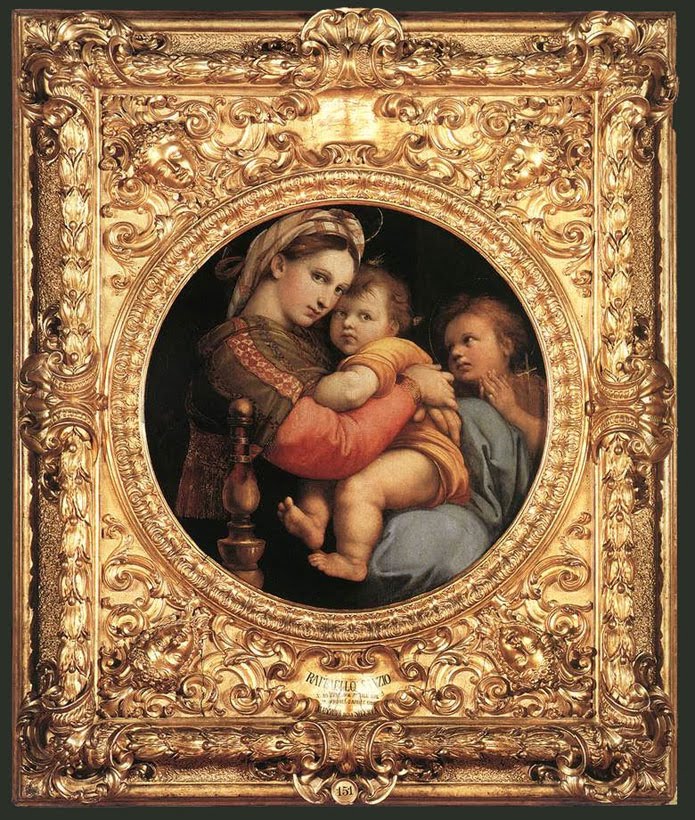
I'm not sure how or why I got onto Barnes and Noble's e-mailing list. I haven't bothered to get myself off of it because sometimes they send me good coupons, but I happen to live in a city with lots of library options, so I very rarely buy books, especially ones I haven't read, which I realize might sound weird and might take all the fun out of reading for people, but for so many years of my life, I had books taking up space on a countless number of shelves, books I never read or intended to read, books I attempted to read and hated, so I've decided that I will not spend any money on a book that I'm not sure I will love (holy run-on sentence, Batman). Therefore, most of the time, I get a book out of the library, take it for a test spin, and then, if it tugs at my heartstrings and makes me catch my breath, I go out and spend the money on it so that it may rest peacefully on my bookshelf not wasting space but serving a purpose. Although, chances are, it may sit there the entirety of my life never having its binding broken open, because I rarely read books twice.
At any rate, shortly after I spent that long weekend at home with my mother while my husband was on a father-son trip, I got an email from Barnes and Noble that caught my eye. My mom and I had just seen "Eat Pray Love" in the theater, which I loved (but mostly for the part where they're describing how Italians talk with their hands because it was SO TRUE), and the subject of the email was "Powerful and Uplifting: A Mother-Daughter 'Eat Pray Love'." So quite unlike myself but driven by curiosity due to current events, I actually opened the B&N email to find a book recommendation for "Traveling with Pomegranates" by Sue Monk Kidd, who some of you may know through her unmistakable novel-turned-movie "The Secret Life of Bees." I am unfamiliar with that work, only know of it by the trailers I've seen during commercial breaks on television, so the fact that she had penned that particular piece was really of no interest to me. What caught my attention, however, was that not only was it a memoir, but it was a shared memoir, alternating essays written by herself with essays written by her daughter.
Naturally, I looked it up on my city's library catalog to see if this was something I could borrow first to see if it was even worth my time. And I found it currently in stock sitting on the shelf waiting for me. And then my husband came home from work and asked if I wanted to go to the library to look for instructional books on how to lay hardwood floors, which he plans on doing in our new house. It was like it was meant to be.
And it was meant to be. The book, while I still have a third of it yet to read, has been such a delight and I plan on buying myself a copy, as well as a copy for my mother and mother-in-law, because I feel it is just too good not to share. I mean, it takes place in Greece and France, had oodles of Greek mythology in it, and I feel it has a rather accurate representation of my current relationship with my mother and is relevant to the periods we are both in in our lives.
But what I seem to like most is the constant presence of the Virgin Mary and what Mary means to these women and all women in general.
I've never been very religious. I've tried to be religious many times in my life, and sometimes I've tried harder than others. I still want to be religious, but haven't quite come to terms with how to do that yet. But I've always felt a connection to Mary. I've always found her to be the most interesting character in all of Christianity, and yet I feel like she is constantly overlooked. Which is perhaps why I like her even more. It's like her and I have a little secret that no one has quite caught onto yet.
I know it all started when my grandma died. I was only five at the time. But ever since then, I've always associated my grandma with Mary. I guess I thought they would get along very well in heaven. Everyone always said my grandmother was a saint. So I guess this was my way of making her one. Besides, I was five. What I knew about death and heaven was so very limited (not that I've learned all that much about it since then). I knew who Mary and Joseph and Jesus were, I knew they were in heaven, and now I knew my grandmother was in heaven. So I suppose it was only natural that I put them all in the same clique up there.
Of course, too, there was the song that they played at her funeral. I don't remember anything about the funeral. I don't remember anything about her sickness or her death. I sometimes think I do remember, but I'm pretty sure it's just the stories that people have told me that I remember and not the actual events themselves. But there is this song that is very common in Catholic churches, especially in the spring, called "Hail Mary, Gentle Woman" that was played at my grandmother's funeral. It's a terribly sad, but beautiful song. My brother hates it... he says the harmony is annoying. I think he either hates it because he's not a woman and doesn't have a connection to Mary or he hates it because he remembers it being played at the funeral (him being 9 at the time and fully capable of remembering) and it makes him sad. And while I myself don't remember it being played at the funeral, what I remember is that every time it is played in a Catholic church to this day, my mother (and aunts, if they are there, too) break down into sobs. And now that I'm old enough to be the kind of sentimental where I cry at happy endings of movies and sappy songs on the radio, I am usually sobbing in the church pew right along with them.
Still, it wasn't until I spent some time in Italy that my infatuation with Mary was brought more to the forefront. As Catholicism is the official religion of the country, Mary is everywhere. She's in the churches, in the museums, but even just on the street corners and painted on apartment walls. I would say the point in my life where I respected religion the most was when I was living in Italy. And perhaps it was when I was the most spiritual.
Because I was "studying" in Italy (technically, I had already graduated, so the classes I didn't care about so much as the whole being in Italy thing), our group went to every single museum in Florence and saw COUNTLESS paintings of the Virgin to the point where they all started to look the same and frankly were starting to get a little boring. But when we got into the Uffizi, I saw a new portrait of Mary that I couldn't take my eyes off of. It was called "Madonna of the Chair." I've posted it at the top of the entry, but I'm not too techy with this whole blog thing yet, so I couldn't get it to go where I wanted it to go. But you can click on it and make it bigger.
ANYWAY, I just thought Mary looked so HUMAN in it. So many other paintings she's depicted as a saint or as royalty, which she is and deserves to be depicted that way, but she was also human, and I think it's the human aspect of her that makes her so appealing. I mean, the woman gave birth in a field, people, with a man she wasn't even married to. I'm married, and my husband is capable of a lot of things, but I don't think I'd let him birth my baby in the middle of g.d. field. And she raised the SON OF GOD. Like, she had to put him in time-outs when he acted up and had to protect him and take care of him. And she had God to answer to if she didn't do her mothering job right. But this painting, it doesn't feel like a painting of Mary and Jesus. It feels like a painting of a mother with her son. She's got a loving, protective grip on him. She seems to know she's gonna have to let go of him, but you can tell she doesn't want to. And all the while, she seems to be giving a look to those watching her that says, "You mess with my baby, you mess with me."
Later in the trip, our leader/instructor took us to an artisan shop to show us that things are still handmade in Italy and that generations of families stay in the same business, and I found that exact picture buried in a pile of plaques, outlined in beautiful gold paint, handcrafted in that very shop. Now I don't know how popular this image is in Italy. But the Uffizi is just ONE museum in Florence and it alone has thousands of paintings in it. What are the chances I would that painting in an artisan shop down some isolated alley? Like it was meant to be.
My mother took a tour group over to Italy the year after I had lived there. I couldn't afford to go with her, which broke my heart. She asked if she could bring anything back for me. I said the only thing I wanted (besides nutella gelato) was a necklace with Mary on it. And in an artisan shop that sounded much like the one I found my Madonna of the Chair in, she found the perfect, most absolutely beautiful Mary cameo and she bought it for me. I still wear it all the time over three years later.
I wear it as a reminder of what I want to be. I don't want to be the next Mother of Christ. I can't be the next virgin mother. That ship has sailed. But Mary, despite being saint royalty, was once a very human woman, a hard-working woman, a proud woman, a woman who did what she had to do without complaint. And from what I've heard about my grandmother, she was a lot like that, too. If I can be half the woman my grandmother was, I would consider my life a success.
Gentle mother, peaceful dove, teach us wisdom, teach us love.
Sometimes I worry that this book is going to be an epic failure, that no one is going to want to read 200 pages about death and grieving, that no one will care about my life or my grandfather's life. But "Traveling with Pomegranates" isn't all happy-happy. In fact, it's mostly not. And yet I can't seem to put it down. After all, death and grieving is a big part of what makes us human, no?
Thursday, August 26, 2010
Going home again.
I got on my writers' group's web site last night to RSVP for the next meeting and quickly realized that I had missed this week's gathering. It hadn't even occurred to me that two weeks had gone by already. It definitely didn't feel like a fortnight, that's for sure. I guess it didn't matter all too much. I hadn't done any new writing, only had gone back and tried to work on all the critiques of last meeting, which did end up adding on two more pages to the "novel." So now I have six pages. My grandfather has been dead nearly a whole two months and I have six pages to show for it and only 10 months to go.
I suppose it's only natural that I've been a little flaky the past two weeks with the whole house hunting process. We did find a house already and have had our offer accepted, which is super speedy from what I've heard when it comes to buying a house. In a way, I'm glad that it only took two weeks, because it's such a demanding and chaotic process. So while the idea of paying both a mortgage and a rent payment for two months because we can't break our lease scares the bejeebus out of me, at least I have little excuse not to write now.
And you would think I would be full of words after last weekend, but that doesn't seem to be the case. Chris left town with his father for some male bonding time and I stayed at my Mom's, talking about Grandpa, going to Grandpa's house, visiting his grave. My senior year of high school, I lived with my grandfather for five months and I know I thought it was terrible at the time, but I can't remember why. So I even dug out the journal I kept senior year and stayed up late at night reading it in hopes of figuring some of that out. Unfortunately, I was involved in a very ridiculous drama-filled high school romance at the time and the majority of the journal was riddled with "love is grand" or "boys suck," with a few "I hate living in Grandpa's house" thrown in there, and that was about it. So no help from that.
I'm not really sure I got the closure I was looking for being in Grandpa's house. I think it made the wound more open, to be honest. I was hoping that I would get to explore the house on my own, to have some quiet time with my memories, but my godparents were there when we showed up, so no luck. I'm not sure it would have made a difference. I'm not even sure what I was really looking for. I felt like I was the ghost in the house, not Grandpa, haunting every room, lingering for no reason in places, trying to take it all in before having to give it all up. I spent most of my time hovering near the coffee cup tree, touching a coffee cup that Grandpa didn't even use, but I felt that coffee cup alone summed up all my memories of that house. I traced the black lines on the dirty-colored porcelain with my fingers, outlining the design of vibrant oranges and their leaves, thinking about how my father used to drink his morning coffee on Sundays from those mugs, how Aunt Beth would take the pot to the living room, first filling up Uncle Jim's mug and then Grandpa's even though no one asked her to. Mom asked me more than once if I wanted to take the mug home or if I wanted the entire mug tree, but I kept saying no. What would I do with a mug tree? What would I do with these hideous '60s mugs? Part of me wanted to take everything home, and part of me wanted everything to stay exactly as it was.
The house wasn't anything like it should have been. So many things have been cleared out and what was still left was stacked against walls on top of each other, often in boxes. It didn't really matter. It was still Grandpa's house to me. I could still see it how it should have been. My cousins are moving into it, changing things around and painting, but I think no matter how they decorate or renovate, I'll still be able to walk into that house and see things just as they always were, rewind the clock and see everything in its proper place, my grandfather rocking happily in his plush mauve lazyboy in the living room.
I suppose it's only natural that I've been a little flaky the past two weeks with the whole house hunting process. We did find a house already and have had our offer accepted, which is super speedy from what I've heard when it comes to buying a house. In a way, I'm glad that it only took two weeks, because it's such a demanding and chaotic process. So while the idea of paying both a mortgage and a rent payment for two months because we can't break our lease scares the bejeebus out of me, at least I have little excuse not to write now.
And you would think I would be full of words after last weekend, but that doesn't seem to be the case. Chris left town with his father for some male bonding time and I stayed at my Mom's, talking about Grandpa, going to Grandpa's house, visiting his grave. My senior year of high school, I lived with my grandfather for five months and I know I thought it was terrible at the time, but I can't remember why. So I even dug out the journal I kept senior year and stayed up late at night reading it in hopes of figuring some of that out. Unfortunately, I was involved in a very ridiculous drama-filled high school romance at the time and the majority of the journal was riddled with "love is grand" or "boys suck," with a few "I hate living in Grandpa's house" thrown in there, and that was about it. So no help from that.
I'm not really sure I got the closure I was looking for being in Grandpa's house. I think it made the wound more open, to be honest. I was hoping that I would get to explore the house on my own, to have some quiet time with my memories, but my godparents were there when we showed up, so no luck. I'm not sure it would have made a difference. I'm not even sure what I was really looking for. I felt like I was the ghost in the house, not Grandpa, haunting every room, lingering for no reason in places, trying to take it all in before having to give it all up. I spent most of my time hovering near the coffee cup tree, touching a coffee cup that Grandpa didn't even use, but I felt that coffee cup alone summed up all my memories of that house. I traced the black lines on the dirty-colored porcelain with my fingers, outlining the design of vibrant oranges and their leaves, thinking about how my father used to drink his morning coffee on Sundays from those mugs, how Aunt Beth would take the pot to the living room, first filling up Uncle Jim's mug and then Grandpa's even though no one asked her to. Mom asked me more than once if I wanted to take the mug home or if I wanted the entire mug tree, but I kept saying no. What would I do with a mug tree? What would I do with these hideous '60s mugs? Part of me wanted to take everything home, and part of me wanted everything to stay exactly as it was.
The house wasn't anything like it should have been. So many things have been cleared out and what was still left was stacked against walls on top of each other, often in boxes. It didn't really matter. It was still Grandpa's house to me. I could still see it how it should have been. My cousins are moving into it, changing things around and painting, but I think no matter how they decorate or renovate, I'll still be able to walk into that house and see things just as they always were, rewind the clock and see everything in its proper place, my grandfather rocking happily in his plush mauve lazyboy in the living room.
Thursday, August 12, 2010
Que sais-je?
I was attempting to hold a book hostage from the library this week. Apparently, you can only renew books once, which I had already done, and so it was demanding to have its book back. I called the library and said, "Hell, no, I'm keeping the book and you have to pay me a quarter for every day I don't return it." Oh, wait. They charged me a quarter for every day I didn't return it. I guess that whole hostage situation didn't turn out too great for me. So eventually I gave in and returned it, and with the money I owed the library, I went to Barnes and Noble and bought my own copy.
It's a really insightful how-to-write book by Bill Roorbach called "Writing Life Stories." If you're trying to write a memoir or an essay or what have you, I think it's an excellent source. Even if you already know all the tips he gives you (which I definitely didn't), it's still overflowing with inspiration, and one can never have too much of that.
One particular such inspiring passage talked about this writer from the 1500s named Michel de Montaigne, whom I had never heard of before. Apparently this writer wore a gold medallion around his neck that had the inscription "Que sais-je," which is French for "What do I know?" It's a rather interesting question for writers, definitely, but for anyone really. I liked it so much, that in true Jenny fashion, my first instinct was to get it tattooed somewhere. But my husband would talk me out of that in the end anyhow, as he tends to do every time I want to tattoo something new on myself, which happens more often than you might think.
So what do I know? Generally, I feel like I don't know much. I don't know much about mortgages (but I'm learning with our ongoing house hunt). I don't know much about politics (except what my husband's opinions are). I don't know much about anything, really, or so it seems. But sometimes I think not knowing is what makes a writer great. It can give a connection to the reader and the writer and let them figure out things they don't know together.
However, Roorbach insists that people know a lot more than they think they do. He said Montaigne "was an expert on himself (as we all are, or should be) and so reported confidently, as an authority... Look inside yourself. What do you know? The answer is that you know a lot, about myriad subjects."
It makes perfect sense. If it's anything we should all be experts on, it's ourselves. Which works out for me, trying to write a memoir and all. But isn't it such hard concept to keep in mind from day to day? I know I often feel like I don't know more than I do know, but I think most people feel that way.
Where the book is involved, though, I definitely know a lot about myself and my relationship with my family and my family, in general. Which I'm sure will come in handy. What the writing group pointed out to me this week, though, is that I don't do a very good job of sharing that knowledge with the rest of the world. Turns out that since my family's habits and personalities are so second-nature to me, I don't explain them for the rest of the world to understand. For example, I wrote about how my Aunt Louise smiles and people thought it was weird she was smiling at a funeral. But Aunt Louise is always smiling, no matter the circumstances. I don't think I've ever not seen her smile. Any other person wouldn't know that, though. They would just think she was being insensitive in such a serious atmosphere. So that's something I have to go back and work on.
Also, I'm having another problem with tone in my story. I don't want it to be all ho-hum because it is taking place at a funeral, but I think I've overcompensated and made the mood too light. Some people thought it was clever that I was making light of such a gloomy situation, but other people thought it made me an unreliable narrator. Which is a funny concept, being an unreliable narrator in a story about you written by you.
And then there's also the problem with dialogue. Someone suggested I have more of it. I've never been good with dialogue. I feel it's boring. But I guess I had better give it a whirl anyhow.
So many times, especially this week when our schedule has been so unpredictable and choatic, I feel like I don't know anything about writing. And then I go to writing club and I feel like maybe I know a little about writing, but definitely not much. I never feel discouraged, though, which is a good thing, I guess. I asked the group flat-out if they thought my piece was boring, and they all said encouraging things without really answering the question. I didn't know if that was a good thing or a bad thing. Then I got home and I was reading through my comments, and one person wrote down, "I didn't think it was boring." So thank you, fellow writer, whoever you are (I couldn't tell by the handwriting). It's nice to know I'm not boring.
So off the top of my head, here's what I know right now:
1. John, the amazing writer who rhymes at Writing Club has bluer eyes than I do, like freaky ridiculously blue eyes. So even though his face looks tired, his eyes are always awake.
2. House hunting absolutely consumes your entire life to the point where it gets obsessive, always checking online to see if a new house has popped up or if perhaps you overlooked one.
3. I cannot have the TV on and expect to get anything productive done, unless I'm in the kitchen, but then I can barely hear the TV anyhow, so it's really not the same thing at all.
Unfortunately, none of those things will help me with my book at all.
It's a really insightful how-to-write book by Bill Roorbach called "Writing Life Stories." If you're trying to write a memoir or an essay or what have you, I think it's an excellent source. Even if you already know all the tips he gives you (which I definitely didn't), it's still overflowing with inspiration, and one can never have too much of that.
One particular such inspiring passage talked about this writer from the 1500s named Michel de Montaigne, whom I had never heard of before. Apparently this writer wore a gold medallion around his neck that had the inscription "Que sais-je," which is French for "What do I know?" It's a rather interesting question for writers, definitely, but for anyone really. I liked it so much, that in true Jenny fashion, my first instinct was to get it tattooed somewhere. But my husband would talk me out of that in the end anyhow, as he tends to do every time I want to tattoo something new on myself, which happens more often than you might think.
So what do I know? Generally, I feel like I don't know much. I don't know much about mortgages (but I'm learning with our ongoing house hunt). I don't know much about politics (except what my husband's opinions are). I don't know much about anything, really, or so it seems. But sometimes I think not knowing is what makes a writer great. It can give a connection to the reader and the writer and let them figure out things they don't know together.
However, Roorbach insists that people know a lot more than they think they do. He said Montaigne "was an expert on himself (as we all are, or should be) and so reported confidently, as an authority... Look inside yourself. What do you know? The answer is that you know a lot, about myriad subjects."
It makes perfect sense. If it's anything we should all be experts on, it's ourselves. Which works out for me, trying to write a memoir and all. But isn't it such hard concept to keep in mind from day to day? I know I often feel like I don't know more than I do know, but I think most people feel that way.
Where the book is involved, though, I definitely know a lot about myself and my relationship with my family and my family, in general. Which I'm sure will come in handy. What the writing group pointed out to me this week, though, is that I don't do a very good job of sharing that knowledge with the rest of the world. Turns out that since my family's habits and personalities are so second-nature to me, I don't explain them for the rest of the world to understand. For example, I wrote about how my Aunt Louise smiles and people thought it was weird she was smiling at a funeral. But Aunt Louise is always smiling, no matter the circumstances. I don't think I've ever not seen her smile. Any other person wouldn't know that, though. They would just think she was being insensitive in such a serious atmosphere. So that's something I have to go back and work on.
Also, I'm having another problem with tone in my story. I don't want it to be all ho-hum because it is taking place at a funeral, but I think I've overcompensated and made the mood too light. Some people thought it was clever that I was making light of such a gloomy situation, but other people thought it made me an unreliable narrator. Which is a funny concept, being an unreliable narrator in a story about you written by you.
And then there's also the problem with dialogue. Someone suggested I have more of it. I've never been good with dialogue. I feel it's boring. But I guess I had better give it a whirl anyhow.
So many times, especially this week when our schedule has been so unpredictable and choatic, I feel like I don't know anything about writing. And then I go to writing club and I feel like maybe I know a little about writing, but definitely not much. I never feel discouraged, though, which is a good thing, I guess. I asked the group flat-out if they thought my piece was boring, and they all said encouraging things without really answering the question. I didn't know if that was a good thing or a bad thing. Then I got home and I was reading through my comments, and one person wrote down, "I didn't think it was boring." So thank you, fellow writer, whoever you are (I couldn't tell by the handwriting). It's nice to know I'm not boring.
So off the top of my head, here's what I know right now:
1. John, the amazing writer who rhymes at Writing Club has bluer eyes than I do, like freaky ridiculously blue eyes. So even though his face looks tired, his eyes are always awake.
2. House hunting absolutely consumes your entire life to the point where it gets obsessive, always checking online to see if a new house has popped up or if perhaps you overlooked one.
3. I cannot have the TV on and expect to get anything productive done, unless I'm in the kitchen, but then I can barely hear the TV anyhow, so it's really not the same thing at all.
Unfortunately, none of those things will help me with my book at all.
Monday, July 26, 2010
You could be, like, a writer.
"Write a book," my brother said from his comfy spot in my new Ikea lounger across the living room. "Just write a book already," he repeated, as it is was the obvious solution all along.
"Seriously, Jen, what is it you want out of life?" he asked.
"I want to be a literature professor, I want to open a dance-slash-exercise studio for women, and I want to write a novel."
"Okay, so start with the one that's the most attainable."
I didn't have a PhD, I wasn't a professional dancer, and I definitely wasn't a professional writer, so I really wasn't sure which one he was suggesting.
He continued on as if I had smacked my hand against my forehead and proclaimed, "OF COURSE!" "If you write for an hour a day," he advised, "think how fast you could write a book."
"Write a book" seemed to be my brother's answer to all of life's tough questions. He had been saying the same thing to my mother since he discovered that she was hiding a 20-year-old manuscript up in the attic. Nevermind that our mother wasn't a writer, never had been, and the manuscript was probably 50 pages in total double-spaced. He believed finishing her "book" would solve all her financial problems, let her quit her job, give her closure with her dead mother and may even help her meet a sophisticated businessman who loved to travel to live out the rest of her life with. IF ONLY SHE'D FINISH THE BOOK.
"You're sitting on a gold mine," he'd tell her, "If only you'd finish the book."
I wanted to tell him to sit down for an hour every day and try to write a novel and see how easy he thought it was then.
Besides that, I wasn't a writer, either. I got my degree in literature, which you would think would mean that I could write, but really, all it means is I can read. The only things I have experience writing about are those things that I read. To actually write something creative that was worthy enough (and long enough--good gracious!) to be published was a whole new ballgame entirely.
Go ahead and disregard the fact that I'd been writing since I was six, typing away stories on my aunt's commodore 64 all summer long, stories about stealing freshly baked banana cream pies and taking adventurous walks in haunted forests, then printing out my literary masterpieces on her tractor-feed printer paper, proudly creasing and ripping the edges off before stapling the multiple pages together. It's astonishing that I, a writer with so much experience, a multiple-time Young Authors Award winner, was now, in her late 20s, cowering at the idea of writing a novel, not when I had had so much promise.
But it was true, as sad as it was. When I became old enough to be self-conscious and when my teen years started to resemble fantasy fiction more than actual life, my creativity disappeared with my pigtails and different-colored socks.
A whole ten months passed before my brother brought it all up again. My grandfather had just passed away and I had written an essay to read at his funeral, my own little eulogy of sorts, a last chance to say all the things I've always wanted to say. Well, it turns out most of the family got a chance to read it a whole two days beforehand because my proud mother, who believes everything I write is pure gold, e-mailed it to all my aunts who then forwarded it onto my cousins. The night before the funeral when we were all gathered for his showing, family members kept coming up to me saying how wonderful my speech was before I even had a chance to speak it. My brother's girlfriend even had already read it, to which she commented, "You could be, like, a writer."
"Thank you!" my brother belted out, throwing his hands into the air. That was only what he had been trying to tell me all along.
So fine, you win. Here I am, giving it a try, testing the waters to see if I'm any good at this writing thing and whether or not my brother was right all along.
"Seriously, Jen, what is it you want out of life?" he asked.
"I want to be a literature professor, I want to open a dance-slash-exercise studio for women, and I want to write a novel."
"Okay, so start with the one that's the most attainable."
I didn't have a PhD, I wasn't a professional dancer, and I definitely wasn't a professional writer, so I really wasn't sure which one he was suggesting.
He continued on as if I had smacked my hand against my forehead and proclaimed, "OF COURSE!" "If you write for an hour a day," he advised, "think how fast you could write a book."
"Write a book" seemed to be my brother's answer to all of life's tough questions. He had been saying the same thing to my mother since he discovered that she was hiding a 20-year-old manuscript up in the attic. Nevermind that our mother wasn't a writer, never had been, and the manuscript was probably 50 pages in total double-spaced. He believed finishing her "book" would solve all her financial problems, let her quit her job, give her closure with her dead mother and may even help her meet a sophisticated businessman who loved to travel to live out the rest of her life with. IF ONLY SHE'D FINISH THE BOOK.
"You're sitting on a gold mine," he'd tell her, "If only you'd finish the book."
I wanted to tell him to sit down for an hour every day and try to write a novel and see how easy he thought it was then.
Besides that, I wasn't a writer, either. I got my degree in literature, which you would think would mean that I could write, but really, all it means is I can read. The only things I have experience writing about are those things that I read. To actually write something creative that was worthy enough (and long enough--good gracious!) to be published was a whole new ballgame entirely.
Go ahead and disregard the fact that I'd been writing since I was six, typing away stories on my aunt's commodore 64 all summer long, stories about stealing freshly baked banana cream pies and taking adventurous walks in haunted forests, then printing out my literary masterpieces on her tractor-feed printer paper, proudly creasing and ripping the edges off before stapling the multiple pages together. It's astonishing that I, a writer with so much experience, a multiple-time Young Authors Award winner, was now, in her late 20s, cowering at the idea of writing a novel, not when I had had so much promise.
But it was true, as sad as it was. When I became old enough to be self-conscious and when my teen years started to resemble fantasy fiction more than actual life, my creativity disappeared with my pigtails and different-colored socks.
A whole ten months passed before my brother brought it all up again. My grandfather had just passed away and I had written an essay to read at his funeral, my own little eulogy of sorts, a last chance to say all the things I've always wanted to say. Well, it turns out most of the family got a chance to read it a whole two days beforehand because my proud mother, who believes everything I write is pure gold, e-mailed it to all my aunts who then forwarded it onto my cousins. The night before the funeral when we were all gathered for his showing, family members kept coming up to me saying how wonderful my speech was before I even had a chance to speak it. My brother's girlfriend even had already read it, to which she commented, "You could be, like, a writer."
"Thank you!" my brother belted out, throwing his hands into the air. That was only what he had been trying to tell me all along.
So fine, you win. Here I am, giving it a try, testing the waters to see if I'm any good at this writing thing and whether or not my brother was right all along.
Subscribe to:
Posts (Atom)